INNOV DS

Co-founder · CTO

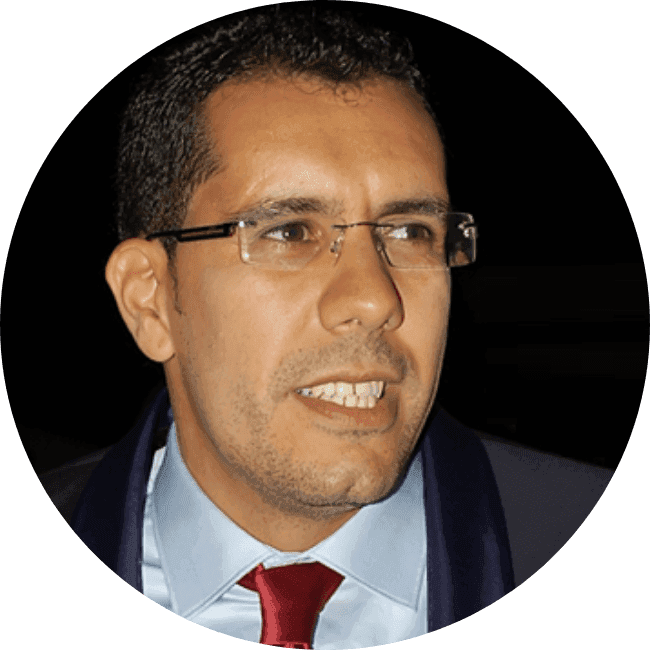
Zouhir Hanafi

Architect of the IDS platform

18 years of software architecture. An industrial ERP he designed in 2012 is still running today — and he is the one rebuilding it.

18
years of software architecture
400,000
users on a platform he re-architected
14
years in continuous production for the ERP he designed
9
domain platforms designed at INNOV DS

The method's pilot

He doesn't talk about the method. He built it.

Our method rests on three pillars. Here they are — and here is what sits behind each one.

Proven modules

A 19-module SDK, started in 2022. Nine domain platforms built as a stable core with opt-in extensions: a client's specifics go through extension points and configuration — never through a diverging copy of the core. That is why the second client costs less than the first.

Tooled standards

A module only becomes "industrialised" after two distinct client projects with no divergence from the core, and a "product" after three projects, code-free configuration and six months of stable releases. The rule is written down, dated, and can be held against us.

AI under guardrails

Framing, trade-offs and review stay human. Execution is delegated to agents — and constrained by checks that break the build. That machinery is what allowed nine domain platforms and five client missions to run in parallel with a small team.

The guardrails

What makes delegation safe

Four checks, run on every integration. None of them is optional.

  1. 01

    A broken architecture rule breaks the build

    The business domain may not depend on infrastructure, and cycles between packages are forbidden. This is not a convention a review might wave through: it is a test that fails.

  2. 02

    A broken event contract is caught in continuous integration

    Every event's schema is generated from the code, published and verified automatically. An incompatible change cannot reach production unseen.

  3. 03

    The tests are themselves tested

    Mutation testing deliberately injects defects into the code: if the test suite stays green, it was testing nothing. High coverage proves little; this proves a lot.

  4. 04

    APIs are verified end to end

    Every endpoint is exercised by automated tests against a real database, and code quality must clear a blocking threshold before any merge.

Two stories

What 18 years leave behind

At INNOV DS

A 2012 industrial ERP, being rebuilt today

Designed in 2012 for a construction-industry manufacturer — while he was at a previous employer — this integrated management system is still at the heart of its operations: fourteen years in production without interruption. The relationship, now sixteen years old, is carried by INNOV DS today — and the rebuild into microservices is led by the person who wrote it.

Before INNOV DS

A monolith turned microservices, at 400,000 users

On a consumer platform run alongside client work, he led the transformation of a monolith into a microservices architecture, and ran Kubernetes in production for seven years. Scaling is not a theoretical topic here: it was lived.

The track record

Eighteen years, in six milestones

The milestones before 2020 predate the founding of INNOV DS: they were carried out at successive employers, or as a partner in a venture.

  1. 2008

    Before INNOV DS

    JEE development, then team management — institutional intranets and business applications.

  2. 2012

    Before INNOV DS

    Go-live of the industrial ERP he designed end to end.

  3. 2014

    Before INNOV DS

    Document management and a workflow engine, in a banking context.

  4. 2017

    Before INNOV DS

    Partner and technical lead of a consumer platform — monolith to microservices.

  5. 2020

    At INNOV DS

    Co-founder of INNOV DS, where he defines the technical core and the architecture.

  6. 2022

    At INNOV DS

    First lines of the Java SDK that becomes the technical core of INNOV DS.

Today

What he answers for

  • The architecture of client missions, from design to production.
  • Code and architecture review — systematic, including on what the agents produce.
  • The technical architecture documents and API specifications delivered to the client.
  • Migration paths: decomposition, progressive cut-over, rollback points.

Day to day

  • Java 21
  • Spring Boot
  • Apache Kafka
  • CloudEvents
  • PostgreSQL
  • Keycloak
  • Kubernetes
  • Docker
  • Next.js
  • TypeScript
  • Domain-Driven Design
  • Architecture hexagonale
  • ArchUnit
  • Karate

A project to scope?

Describe your process: you will get a straight answer on what is feasible, at what cost and in what time.

Talk about your project